
Maintaining a safe working environment is a primary responsibility for every business owner and property manager across the South Coast. In the bustling commercial hubs of Hampshire, from the industrial estates of Portsmouth to the corporate offices in Basingstoke, electrical safety is not merely a recommendation; it is a fundamental pillar of operational integrity. Commercial PAT Testing Hampshire represents the frontline of defence against electrical fires, equipment failure, and potential legal liabilities. This comprehensive guide explores why regular testing is vital, what the process entails, and how businesses can stay ahead of their safety obligations.
Portable Appliance Testing, commonly known as PAT, is the process of periodically inspecting electrical appliances to ensure they are safe to use. While the term portable is used, it actually encompasses a wide range of equipment including IT hardware, kitchen appliances, power tools, and even heavy machinery that is not permanently wired into the infrastructure. For a business operating in the competitive Hampshire market, an electrical fault can lead to significant downtime, loss of data, or in the worst-case scenario, serious injury to staff or the public. By investing in professional testing, companies demonstrate a clear commitment to Health and Safety Executive (HSE) guidelines and the Electricity at Work Regulations 1989.
The Legal Landscape for Hampshire Businesses
The legal framework surrounding electrical safety in the UK is stringent, and for good reason. Under the Health and Safety at Work Act 1974, employers have a duty of care to ensure the safety of their employees and anyone else on their premises. This is further reinforced by the Management of Health and Safety at Work Regulations 1999, which require employers to carry out risk assessments. Within these assessments, the safety of electrical equipment is a critical component. If an accident occurs and it is found that the equipment was not properly maintained or tested, the business could face heavy fines, legal action, and a tarnished reputation.
In the context of Commercial PAT Testing Hampshire, local businesses must also consider their insurance policies. Most commercial insurance providers in the UK stipulate that electrical equipment must be maintained in a safe condition as a prerequisite for coverage. Should a fire be traced back to an untested toaster in a staff room or a faulty server power lead, the insurer may refuse to pay out the claim. This financial risk often far outweighs the modest cost of a professional testing programme. By keeping a detailed log of all PAT results, Hampshire business owners create a “paper trail” of compliance that protects them during audits or insurance renewals.
Identifying Which Appliances Require Testing
One of the most common questions businesses ask is what exactly needs to be tested. The scope of commercial electrical equipment is broader than many realise. Generally, any item that connects to the mains power supply via a plug and lead requires inspection. This includes “Stationary Equipment” like industrial refrigerators, “IT Equipment” such as computers and printers, and “Movable Equipment” like electric heaters or vacuum cleaners. Even extension leads and multi-way adapters are frequent culprits for electrical faults and must be tested rigorously.
In a commercial setting, the frequency of testing depends on the environment. A power tool used daily on a construction site in Southampton will require more frequent checks than a desktop computer in a quiet office in Winchester. Professional inspectors categorise equipment based on risk. High-risk items in harsh environments might need testing every six months, whereas low-risk office equipment might only require a formal inspection every 12 to 24 months. A qualified technician from Knight Landlord Services can provide a tailored testing schedule that aligns with the specific needs of your Hampshire business, ensuring you are neither under-protected nor over-spending on unnecessary checks.
The Professional PAT Testing Process Explained
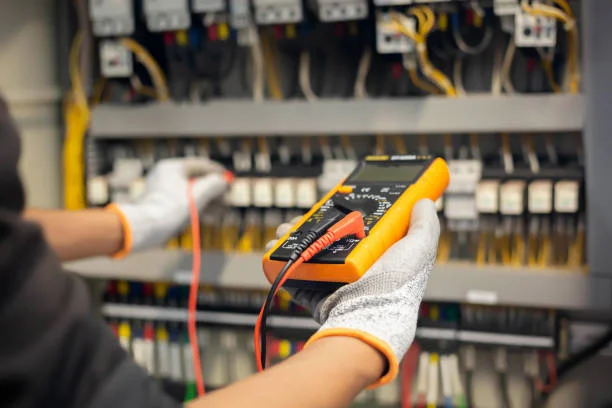
When you engage a specialist for Commercial PAT Testing Hampshire, the process is divided into two main phases: the visual inspection and the manual electronic test. Statistical data from the HSE suggests that up to 90% of electrical defects can be identified during a thorough visual inspection. The technician will look for damaged plugs, frayed cables, signs of overheating (such as discolouration), and incorrect fuses. They also ensure that the cable grip is securing the outer insulation of the wire correctly. This stage is crucial because internal electronic tests may not always catch a physical weakness in a cable that is prone to snapping or sparking.
Following the visual check, the technician uses a specialised PAT testing device to perform a series of electronic measurements. These typically include Earth Continuity Testing, which ensures the equipment is properly grounded, and Insulation Resistance Testing, which checks that the internal wiring is effectively insulated from the outer casing. For sensitive IT equipment, “soft tests” are performed to prevent data corruption or hardware damage. Once an item passes, a green “Pass” label is affixed to the appliance, clearly stating the date of the test and the ID of the inspector. Any items that fail are marked with a red “Fail” label and should be removed from service immediately until they can be professionally repaired or replaced.
Benefits of Choosing a Local Hampshire Specialist
Working with a local provider like Knight Landlord Services offers distinct advantages for Hampshire-based commercial entities. Local knowledge means a faster response time for reactive maintenance and a better understanding of the local business community. Whether you are a landlord managing a suite of commercial offices in Portsmouth or a shop owner in Fareham, having a reliable contact nearby simplifies the logistics of scheduling annual safety checks. Furthermore, local technicians are familiar with the specific property types found in the region, from Victorian conversions to modern industrial units.
Efficiency is another key factor. A professional service understands that businesses cannot afford to stop operations for hours on end. Experienced inspectors work methodically to minimise disruption, often testing equipment during lunch breaks or after hours if required. They provide a comprehensive Asset Register and a Certificate of Compliance upon completion. This documentation is essential for your health and safety files. Beyond the paperwork, regular testing can actually extend the lifespan of your appliances. Identifying a loose wire or a failing fuse early can prevent a total breakdown of expensive machinery, saving the business significant capital expenditure in the long run.

Why Knight Landlord Services is the Right Choice
Knight Landlord Services brings a wealth of experience to the field of commercial electrical safety. While the name highlights a focus on landlords, the team’s expertise extends fully into the commercial and industrial sectors across Hampshire. Their approach is built on transparency and technical excellence. Every technician is fully trained and equipped with the latest calibrated testing technology to ensure accuracy. They don’t just “tick boxes”; they provide genuine insight into the health of your electrical systems, offering advice on repairs and upgrades where necessary.
By choosing a firm that specialises in both maintenance and electrical compliance, Hampshire businesses gain a holistic partner. If a PAT test identifies a faulty plug on a vital piece of equipment, the Knight Landlord Services team can often rectify the issue on the spot, rather than leaving you with a “Fail” sticker and a broken appliance. This “can-do” attitude is what has built their reputation for reliability. From the initial quote to the delivery of the final safety report, the focus remains on keeping your staff safe and your business legally compliant without the stress often associated with health and safety audits.
Frequently Asked Questions (FAQs)
Is PAT testing a legal requirement for UK businesses?
While the law does not explicitly state that you must “PAT test,” it does mandate that all electrical equipment provided in a place of work must be maintained in a safe condition. The Health and Safety Executive (HSE) and insurance companies view PAT testing as the most effective and universally recognised way to meet this legal obligation. Without a record of testing, it is very difficult to prove that you have taken reasonable steps to ensure safety.
How often should I arrange Commercial PAT Testing Hampshire for my office?
For a standard office environment, a common recommendation is to have a formal visual inspection and manual test every 12 to 24 months. However, items that are moved frequently, such as laptop chargers or vacuum cleaners, may require annual checks. We recommend a risk-based approach where we assess your specific equipment and environment to create a schedule that keeps you compliant without excessive costs.
What happens if an appliance fails the test?
If an item fails, the inspector will label it clearly and inform the site manager. The appliance must be taken out of use immediately to prevent injury or fire. In many cases, the fault is minor, such as an incorrect fuse or a loose wire in the plug. Our technicians can often perform these small repairs during the visit to get the equipment back into safe working order as quickly as possible.
Does PAT testing include fixed wiring or wall sockets?
No, PAT testing only covers the appliances that plug into the system. The permanent electrical infrastructure of the building, such as the fuse board (consumer unit), wiring inside the walls, and the sockets themselves, are covered by an EICR (Electrical Installation Condition Report). It is best practice to have both a current EICR and up-to-date PAT records to ensure total building safety.
Can my own staff perform PAT testing?
The law requires that the person carrying out the tests must be “competent.” This means they must have the correct equipment, the knowledge to use it, and the ability to interpret the results accurately. While some large companies train internal staff, most small to medium businesses in Hampshire find it more cost-effective and legally robust to hire a certified professional who carries professional indemnity insurance and uses calibrated equipment.
Share This Story, Choose Your Platform!
About Knight Landlord Services

